In the diagram, is a square and is the midpoint of . The area of triangle is 100. The area of the square is
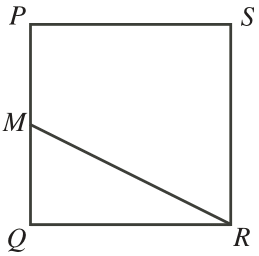
In the diagram, is a square and is the midpoint of . The area of triangle is 100. The area of the square is
Solution 1
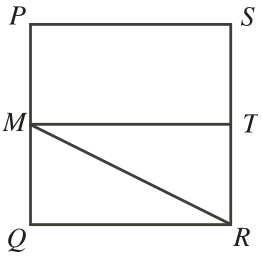
Draw a line from to on so that is parallel to .
Then is a rectangle. This means that the area of is half of the area of rectangle .
Thus, the area of is .
Since is the midpoint of and is a square, then is the midpoint of .
This means that the area of is half of the area of .
Therefore, the area of is .
Solution 2
Suppose that the side length of square is .
Since is the midpoint of , then .
Since is a square, then is right-angled at .
Therefore, the area of is .
Since the area of is 100, then , and so , since .
Thus, the side length of square is and so the area of square is .