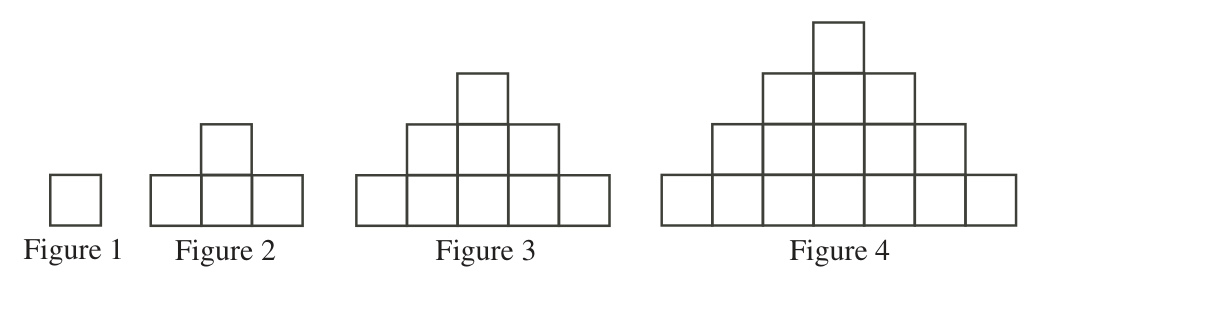
Consider the following sequence of figures showing arrangements of square tiles: Figure 1, Figure 2, Figure 3, Figure 4. More figures can be drawn, each having one row of tiles more than the previous figure. This new bottom row is constructed using two tiles more than the number of tiles in the bottom row of the previous figure. (a) Figure 4 is cut into two pieces as shown. Draw a rearrangement of these two pieces showing how they can be formed into a square having tiles. (b) Determine the number of tiles in Figure 5. (c) Determine the number of tiles in the bottom row of Figure 10. (d) Determine the difference between the total number of tiles in Figure 11 and the total number of tiles in Figure 9.