Five paths from to are shown. In which figure is the path
the shortest?
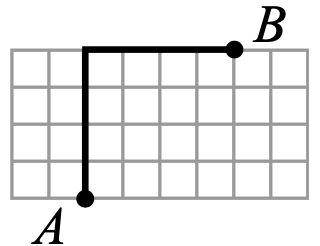
Figure 1
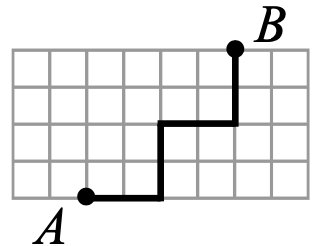
Figure 2
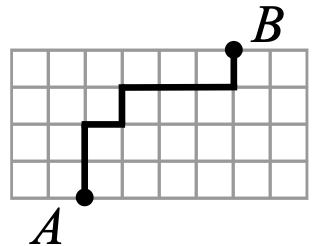
Figure 3
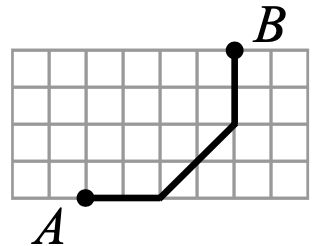
Figure 4
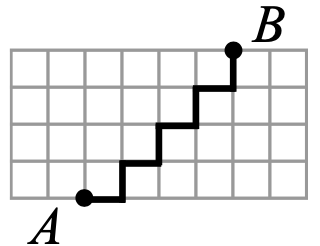
Figure 5
Five paths from to are shown. In which figure is the path
the shortest?
Figure 1
Figure 2
Figure 3
Figure 4
Figure 5
Pick one
In each of the figures 1, 2, 3, and 5, the path between and travels exactly squares horizontally (left to right)
and squares vertically (bottom to
top), and so each path has length . In Figure 4, the path travels
squares horizontally, squares vertically, and along the
diagonal of a by square. The path along the diagonal of
a by square is shorter than travelling along
both a horizontal side and a vertical side of the by square. Thus the length of the path in
Figure 4 is less than and is the
shortest of the given paths. (Using the Pythagorean theorem, we can
confirm that is
indeed less than .)