A square sheet of paper lying on the table is divided into equal squares. These squares are numbered from a1 to h8 as on a chess board (see fig. 1). We now start folding, in such a way that square a1 always stays in the same spot on the table. First we fold along the horizontal midline (fig. 1). This will cause square a8 to fold on top of square a1. Then we fold along the vertical midline (fig. 2). Next, we fold along the new horizontal midline (fig. 3), et cetera. After folding six times, we have a small package of paper in front of us (fig. 7) that we can consider as a stack of 64 square pieces of paper.
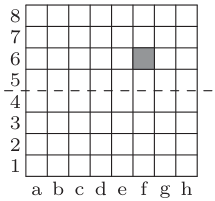
fig. 1
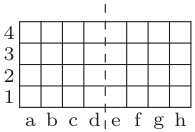
fig. 2
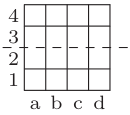
fig. 3
...

fig. 7
The squares in this stack are numbered from bottom to top from 1 to 64.
So square a1 gets number 1.
Which number does square f6 get?
Netherlands — Second Round
Solution
43
Want a route through all this instead of an archive? The track
puts 2,604 problems in a working order, from Junior Challenge level to the IMO shortlist.