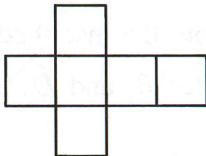
We consider a cm rectangular table. The table is divided by parallel lines to squares of side cm. We have tiles of cross shape, consisting of squares of side cm, as in the figure. Determine the maximal possible number of non-overlapping tiles we can pack in the table such that each tile is covering exactly small squares of the table.
Greece — Selection Examination
Solution
We observe that for the covering of the squares having a side on the border of the table and especially for the four corner squares we can put on each corner one tile covering only two squares, while four squares is not possible to be covered. Therefore in the four corners will be uncovered squares.
For the rest of the border squares we observe the following:
* On the sides of length of cm for each covered square remains one also uncovered. So in these sides will remain at least two uncovered squares.
* On the sides of length of cm we can cover one square and another one will remain uncovered.
In this way in our effort to cover the border squares will remain totally uncovered at least squares. Therefore it is possible to cover at most squares. Since each tile covers squares exactly, we finally can pack in the table at most tiles. In figure 5 it is shown that such packing is possible. Therefore the maximal number of tiles we can pack in the table is .
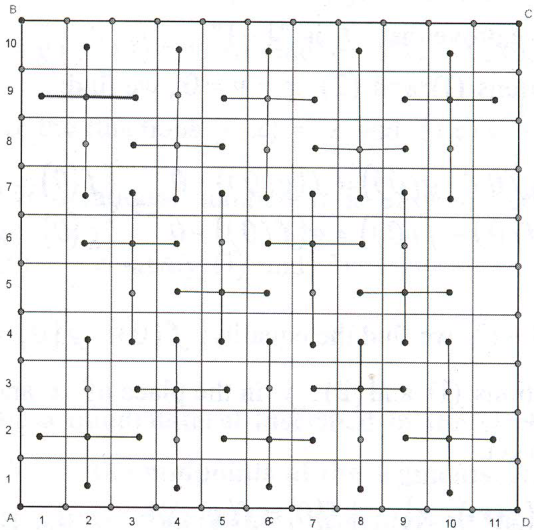
Figure 5
Want a route through all this instead of an archive? The track
puts 2,604 problems in a working order, from Junior Challenge level to the IMO shortlist.