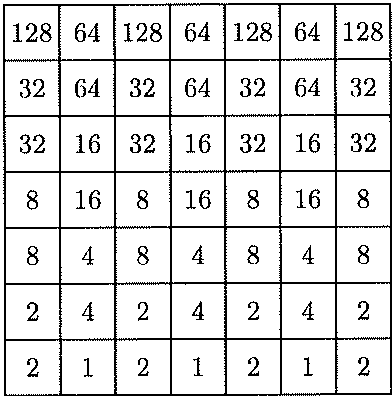
In a chessboard, a coin is placed in the square in the first row from the top, the fourth column from the left. We call square a lower left square of square if is squares to the left and squares below for some positive integer . Similarly, we call square a lower right square of square if is squares to the right and squares below for some positive integer . For a square not on the bottom line, one can perform one of the following four operations when a coin is placed on :
a. Remove a coin from and place a coin in the square one below .
b. Remove a coin from and place coins in each of the lower left squares of .
c. Remove a coin from and place coins in each of the lower right squares of .
d. Remove a coin from and place coins in the square one square to the left and one square below , and the square one square to the right and one square below . If there is only one such square, place a coin in that square only.
If there is already a coin in the place where one intends to place a coin, one will not place the coin there.
Find the maximum possible number of coins that can be placed on the square when the operation is performed an arbitrary number of times.
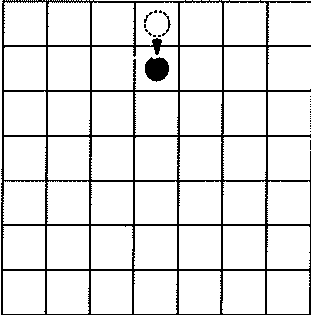
(a)
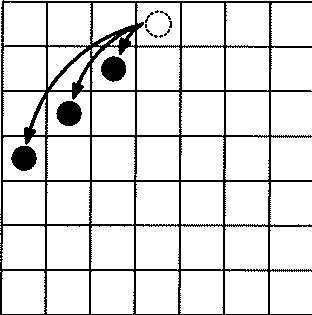
(b)
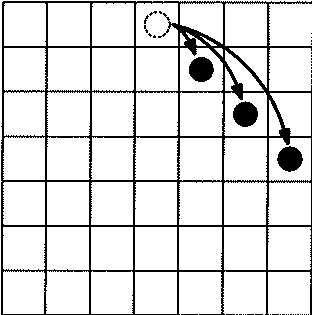
(c)
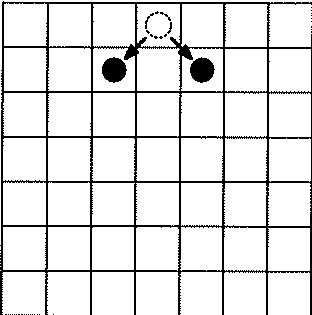
(d)