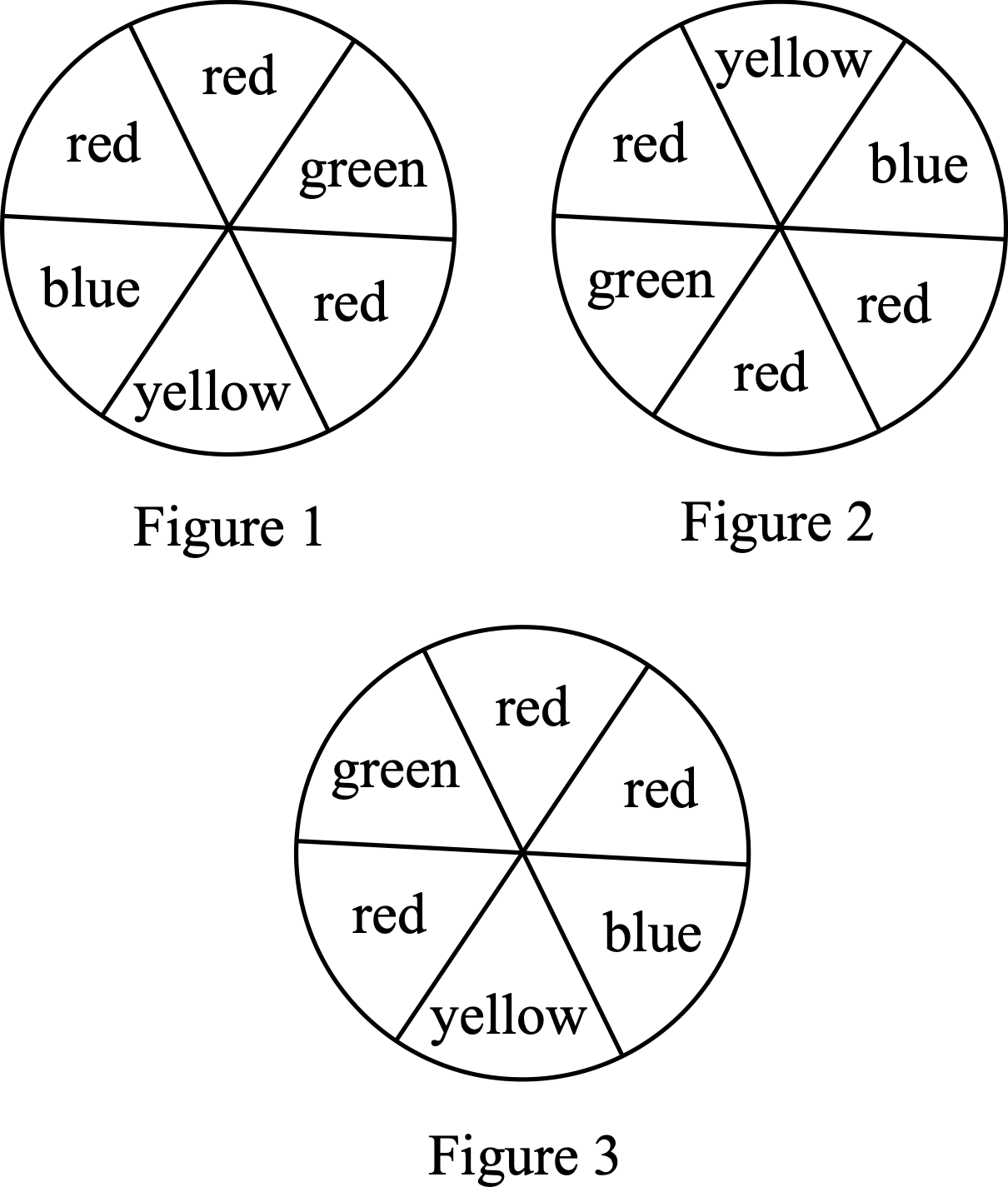
Solution 1
Begin by colouring the section at the top blue.
Since two circles have the same colouring if one can be rotated to match
the other, it does not matter which section is coloured blue, so we
arbitrarily choose the top section.
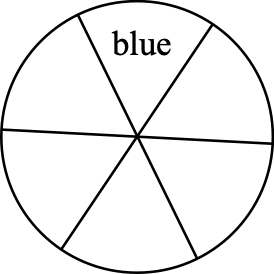
There are now 5 sections which can be coloured green.
After choosing the section to be coloured green, there are 4 sections
remaining which can be coloured yellow.
Each of the remaining 3 sections must then be coloured red.
Thus, the total number of different colourings of the circle is 5×4=20.
Solution 2
We begin by considering the locations of the three sections coloured
red, relative to one another.
The three red sections could be adjacent to one another, or exactly two
red sections could be adjacent to one another, or no red section could
be adjacent to another red section.
We consider each of these 3 cases separately.
Case 1: All three red sections are adjacent to one
another.
Begin by colouring any three adjacent sections red.
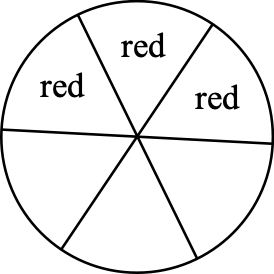
Since two circles have the same colouring if one can be rotated to
match the other, it does not matter which three adjacent sections are
coloured red.
Consider the first section that follows the three red sections as we
move clockwise around the circle.
There are 3 choices for the colour of this section: blue, green or
yellow.
Continuing to move clockwise to the next section, there are now 2
choices for the colour of this section.
Finally, there is 1 choice for the colour of the final section, and thus
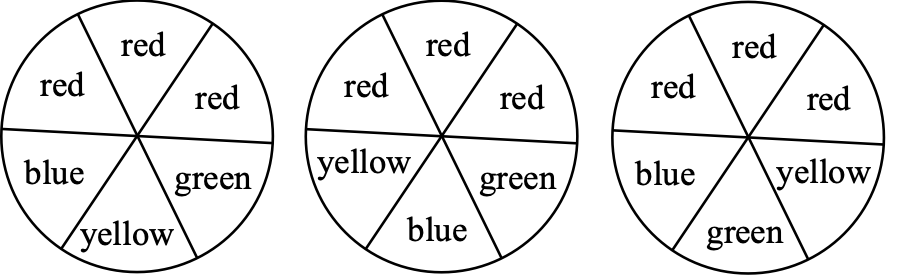
there are 3×2×1=6
different colourings of the circle in which all three red sections are
adjacent to one another.
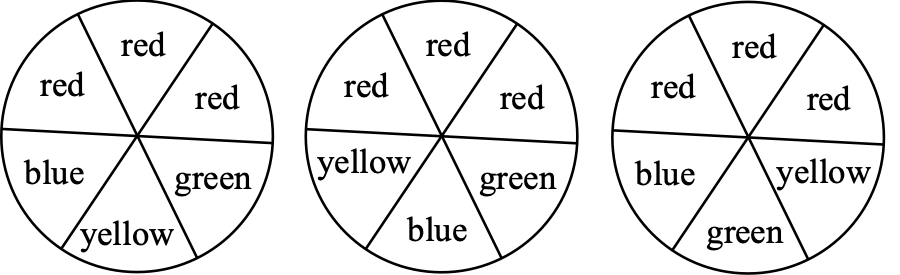
These 6 colourings are shown below.
Case 2: Exactly two red sections are adjacent to one
another.
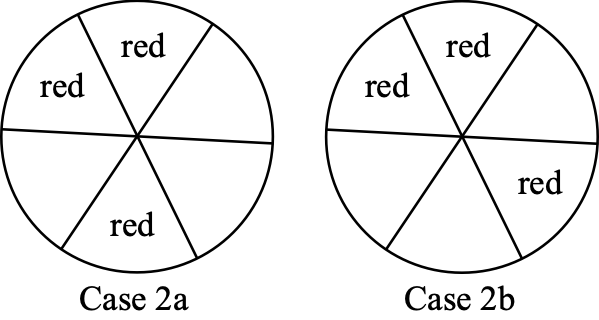
There are two different possible arrangements in which exactly two
red sections are adjacent to one another.
In the first of these, the next two sections that follow the two
adjacent red sections as we move clockwise around the circle, are both
not red. We call this Case 2a.
In the second of these, the section that follows the two adjacent red
sections as we move clockwise around the circle is not red, but the next
section is. We call this Case 2b.
The arrangements for Cases 2a and 2b are shown below.
Notice that the first of these two circles cannot be rotated to match
the second.
The number of colourings in Case 2a and in Case 2b are each equal to the
number of colourings as in Case 1.
That is, there are 3 choices for the first uncoloured section that
follows the two red sections as we move clockwise around the
circle.
Continuing to move clockwise to the next uncoloured section, there are
now 2 choices for the colour of this section.
Finally, there is 1 choice for the colour of the final section, and thus
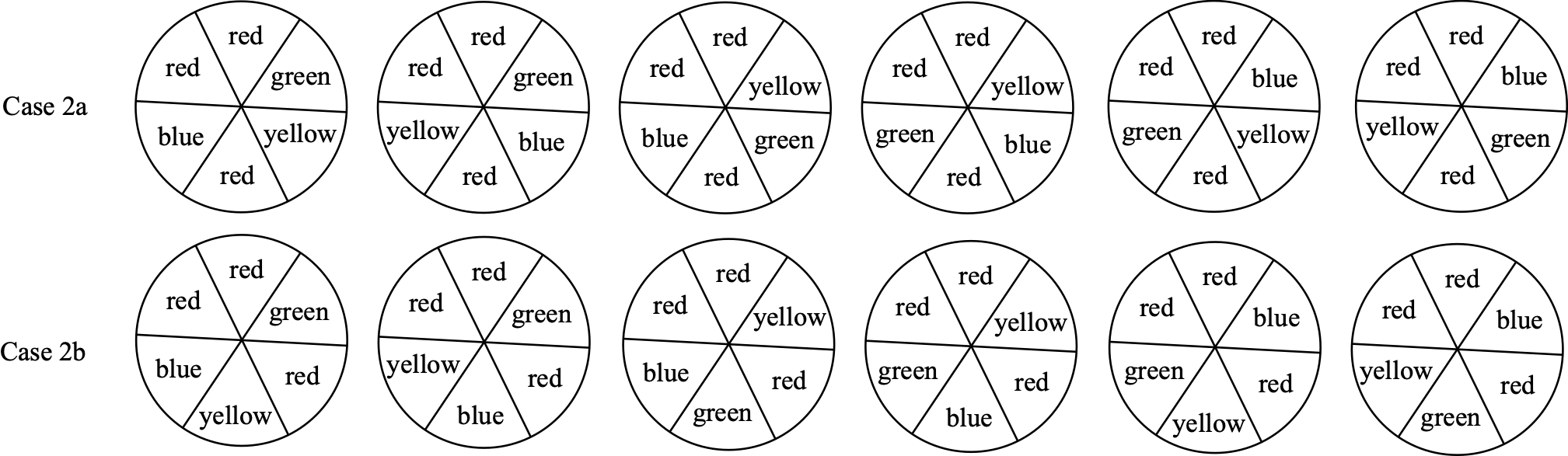
there are 3×2×1=6
different colourings of the circle in Case 2a as well as in Case
2b.
These 12 colourings are shown below.
Case 3: No red section is adjacent to another red section.
Begin by colouring any three non-adjacent sections red.
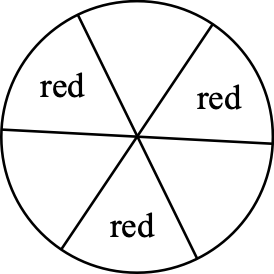
Since two circles have the same colouring if one can be rotated to
match the other, it does not matter which three non-adjacent sections
are coloured red.
In this case, there are 2 possible colourings as shown below.
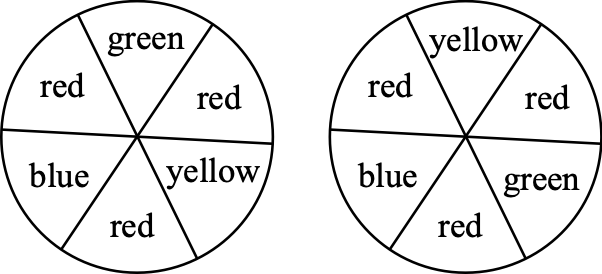
A circle with any other arrangement of the green, yellow and blue
sections can be rotated to match one of the two circles above.
The total number of different colourings of the circle is 6+12+2=20.